
Lally Column Replacement in Older Massachusetts Homes: Homeowner’s Guide
Many homeowners across Greater Boston and the North Shore first hear the term “Lally column replacement” during a home inspection or after noticing sagging floors, cracked plaster, or rusted basement supports. In Massachusetts — where many homes are 75 to 150 years old — structural support systems often require modernization to meet today’s safety standards.
Whether you’re dealing with corroded steel columns or original wooden posts from the late 1800s, understanding the replacement process is essential for protecting your home’s structural integrity. Proper column replacement is not just a repair — it is a controlled structural correction designed to restore proper load transfer and long-term stability.
Lally Column Replacement in Massachusetts
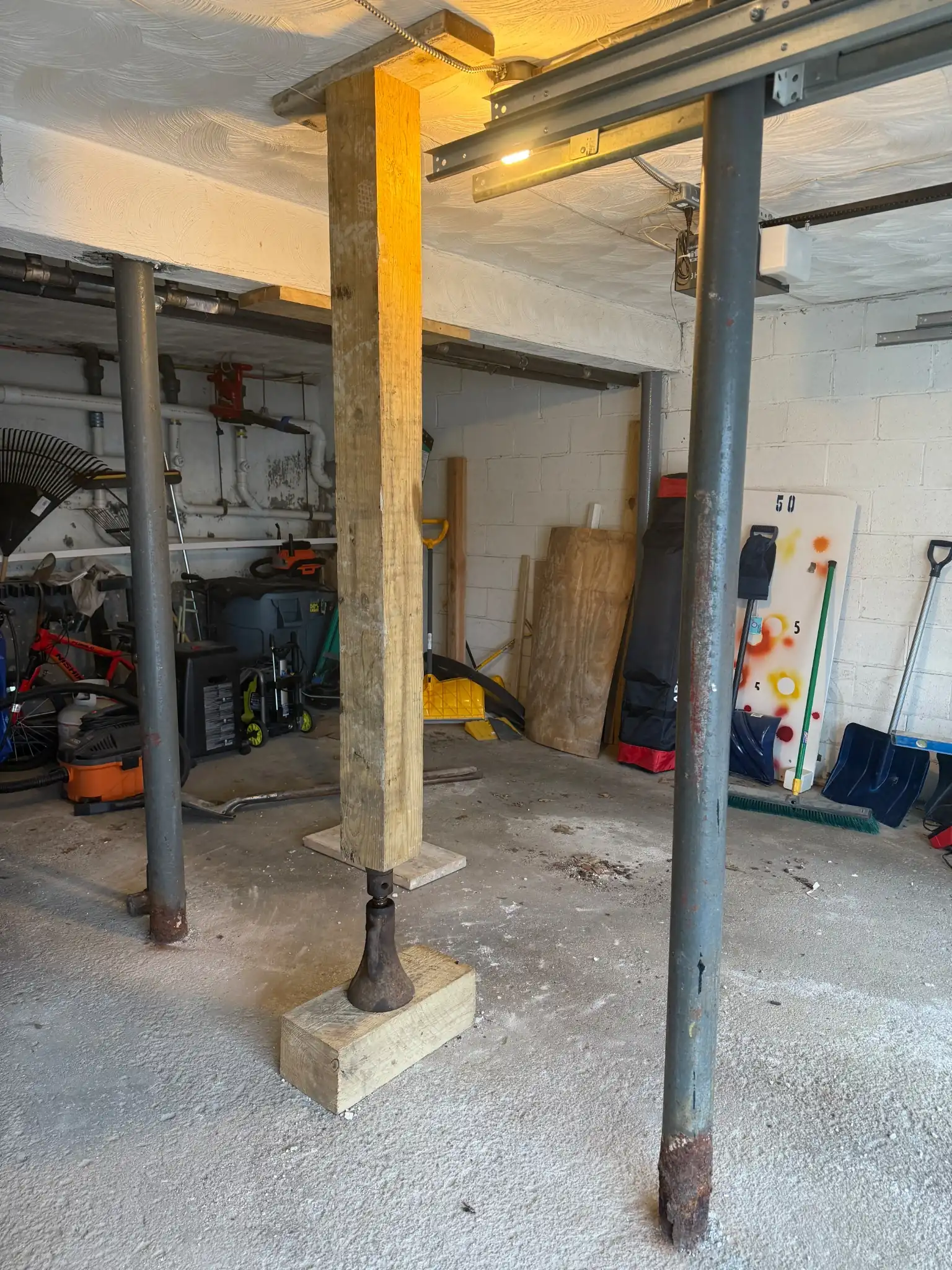
Lally column replacement is a structural repair used to restore proper support to load-bearing beams in basements and garages. In many older Massachusetts homes, original steel columns can rust at the base, sit on inadequate footings, or be replaced temporarily with adjustable jack posts.
A professional column replacement typically involves:
- Temporarily supporting the beam above
- Removing the deteriorated column
- Installing a reinforced concrete footing if required
- Installing a code-compliant steel Lally column
- Transferring the structural load back onto the new support
Because many homes across Greater Boston and the North Shore were built 75–150 years ago, structural support systems often require modernization to meet today’s building standards.
What is a Lally Column?
Named after John Lally, who revolutionized structural support in Waltham, MA in the late 1800s, a true Lally Column is more than just a metal pipe. It is a round, thin-gauge steel shell filled with high-density concrete. When installed over a properly sized concrete footing, it provides the compressive strength required to safely transfer structural loads from the beam above to the foundation below. This combination delivers the structural capacity required to support a New England home while providing fire resistance that hollow posts lack.

Important Note: Do not confuse a permanent Lally column with an “adjustable jack post” found at hardware stores. Jack posts are generally for temporary shoring and rarely meet Massachusetts building codes for permanent primary support.
Common Red Flags: When Basement Support Columns Need Replacement
If your home was built between 1880 and 1950, your basement likely features one of these “at-risk” supports:
- Rusted Bases: In damp New England basements, the bottom of steel columns often corrodes. If you can flake off rust with a screwdriver, the structural integrity is compromised.
- Original Wooden Posts: “Tree trunk” or 6×6 wooden posts are susceptible to rot and compression over time.
- The “Mushroom” Effect: If the horizontal main beam is visibly sinking into the top of the post, the load distribution has failed.
- Inadequate or Missing Footings: Many older columns were installed directly on thin basement slabs or even compacted soil, which cannot properly distribute structural loads.
The Replacement Process: What to Expect
Understanding the replacement process helps homeowners feel confident and prepared. While every home is different, most Lally column replacement projects in Massachusetts follow a similar sequence:
1. Initial Assessment
We begin by evaluating the existing supports, floor framing, and load conditions. In older homes, we often see rusted steel columns, undersized supports, or even original wooden posts that are no longer structurally adequate.
2. Permit & Engineering Requirements
Permit requirements vary by city and town. Some municipalities require stamped drawings prepared by a licensed structural engineer, while others allow replacement under a standard building permit without engineered plans.
When engineering is required, a Massachusetts-licensed structural engineer evaluates the load conditions, prepares the structural layout, and provides stamped drawings and calculations before work begins. This ensures the replacement complies with the Massachusetts State Building Code and satisfies local inspection requirements.
3. Temporary Structural Support
Before removing any existing column, the load above is carefully supported using temporary structural supports. This step protects the structural integrity of the home during the transition and prevents movement during the replacement process.
4. Footing Installation
Many older homes do not have adequate concrete footings beneath their columns. When necessary, we excavate and pour new reinforced concrete footings sized appropriately to support the structural load and meet code requirements.
5. Column Installation
New steel Lally columns are installed, cut precisely to height, plumbed, and permanently secured according to code. Columns are properly rated for the required structural load and installed over adequate concrete footings to ensure long-term stability and compliance with Massachusetts building standards.
6. Inspection & Final Adjustment
If a permit was required, the work is inspected by the local building department. Once approved, temporary supports are removed and the structure is fully stabilized.
All structural work is performed in coordination with local permitting authorities and in accordance with the Massachusetts State Building Code.
Why This Matters
In Massachusetts — especially in homes built 75–150 years ago — column replacement is not just a swap-out job. It’s a structural correction. When executed correctly, it restores proper load transfer, reduces floor deflection, and significantly improves long-term structural safety.

What Does Lally Column Replacement Cost in Massachusetts?
The cost of Lally column replacement varies depending on several structural factors, including:
- Whether new reinforced concrete footings are required
- Whether stamped engineering drawings are required
- Soil conditions and excavation complexity
- The number of columns being replaced
- Access limitations in older basements
Because each home’s structural configuration is different, an on-site evaluation is necessary to determine the proper scope of work and associated cost.
Why a Local Structural Specialist Matters in Massachusetts
Structural column replacement is not a one-size-fits-all repair. In the Greater Boston area and across the North Shore, soil conditions, foundation types, and municipal permitting requirements vary significantly from town to town.
From heavy clay soils near the coast to ledge and rock conditions common in MetroWest communities, proper footing installation and load transfer must account for local ground conditions and structural history.
Working with a contractor who understands these regional variables reduces risk, improves inspection outcomes, and protects long-term structural performance.
Local Knowledge Makes the Difference
Older homes in cities such as Salem, Somerville, Newton, and surrounding communities often feature fieldstone foundations and aging framing systems that behave differently than modern poured concrete construction.
A contractor experienced with these 75–150-year-old structures understands how load shifts, settlement patterns, and footing design interact within these historic foundations.
When structural corrections are handled properly, homeowners gain stability, safety, and long-term peace of mind.
Summary
Lally column replacement in older Massachusetts homes is a structural correction — not a cosmetic repair. From evaluating load conditions and municipal permitting requirements to installing properly sized reinforced concrete footings and code-compliant steel columns, each step must be executed in accordance with structural best practices and the Massachusetts State Building Code to ensure proper load transfer and long-term structural stability.
Because homes across Greater Boston and the North Shore often feature aging framing systems and historic foundations, proper structural planning is essential for safe load transfer and inspection approval.
Planning a Lally Column Replacement?
Tell us your town, how many columns are involved, and what prompted the project. If you have an inspection report or engineer drawings, mention them in your request so we can discuss the next step.
Learn more about our Lally column replacement services in Massachusetts.